Why does the compressive strength of hollow bricks vary? What factors determine the quality of concrete hollow bricks?
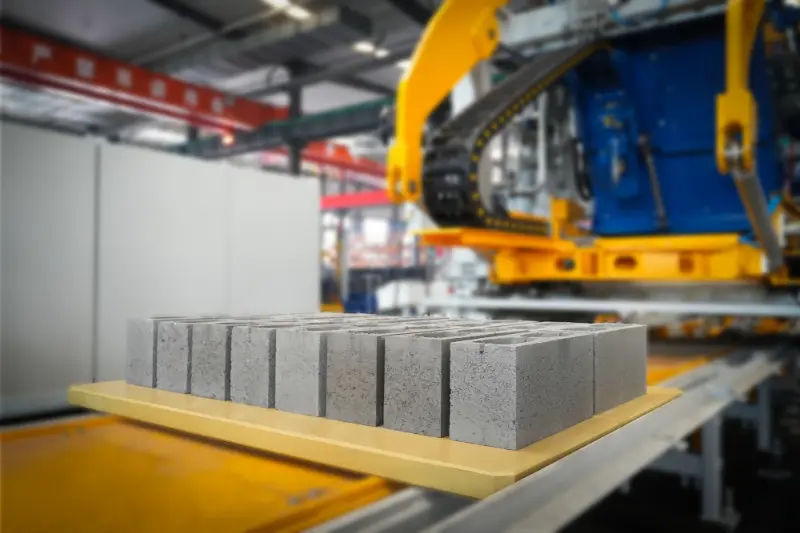
In the production of concrete blocks, the compressive strength of hollow bricks is a key performance indicator for customers. Even when using the same basic ingredients—such as cement, sand, gravel, and other aggregates—products manufactured by different companies or on different equipment can vary significantly in terms of compressive strength, density, and surface quality.
Why does this happen?
In reality, the compressive strength of hollow bricks is not determined solely by the raw materials; factors such as the mix ratio, concrete moisture content, uniformity of material distribution, vibration molding, molding pressure, mold precision, and curing conditions all influence the final product’s performance.
I. Raw Materials and Mix Ratios Determine Basic Product Performance
Concrete hollow bricks are typically composed of cement, sand, gravel, and other aggregates. The particle size, moisture content, and quality of these raw materials directly affect the properties of the concrete mixture.
A well-designed mix ratio enables the aggregates to form a stable gradation structure and reduces internal porosity, thereby increasing the block’s density and compressive strength.
Therefore, producing high-strength hollow bricks requires first establishing an appropriate concrete formula based on local raw material characteristics and specific product requirements.
II. Concrete Moisture Content Affects Hollow Brick Molding Quality
Concrete blocks are produced using a vibration-pressing molding process, which imposes specific requirements on the moisture content of the mixture.
If the mixture is too dry, it may result in:
Uneven material distribution;
Material deficiencies at the product edges and corners;
Insufficient density of the green brick.
If the moisture content is too high, it may compromise demolding and the stability of the product’s shape.
Therefore, stable proportioning, mixing, and material feeding systems are crucial foundations for ensuring the quality of concrete blocks.
III. Vibration Molding Is a Key Factor Affecting Compressive Strength
This is a primary reason for the performance differences observed in products from various hollow brick machines.
Once the concrete enters the mold, appropriate vibration is required to rearrange the aggregates and expel air, thereby increasing the density of the mixture.
Improper vibration parameters can lead to:
Insufficient green brick density → Increased internal porosity → Reduced compressive strength.
Consequently, the vibration system, frequency, amplitude, and duration all influence the quality of the final product.
IV. Molding Pressure Affects Block Density
In addition to vibration, molding pressure plays a critical role.
A proper combination of vibration and pressure ensures the concrete mixture fully fills the mold and creates a green brick with a more uniform structure.
Taking the SUOTENG QT10-15 fully automatic block molding machine as an example, the equipment achieves stable block formation by synergizing vibration molding with pressing processes; it is capable of producing a wide range of hollow blocks, solid blocks, and other concrete products.
V. Mold Precision Affects Product Quality
When selecting a concrete block machine, many people focus solely on the main unit while overlooking the mold.
The mold not only determines the dimensions and core configuration of the hollow blocks but also influences how the concrete is distributed within the mold and the quality of the formed block.
High-precision molds, combined with stable molding equipment, enable manufacturers to achieve greater consistency in product dimensions and surface quality.
VI. Curing Determines Final Strength
The production process does not end once the hollow blocks are demolded.
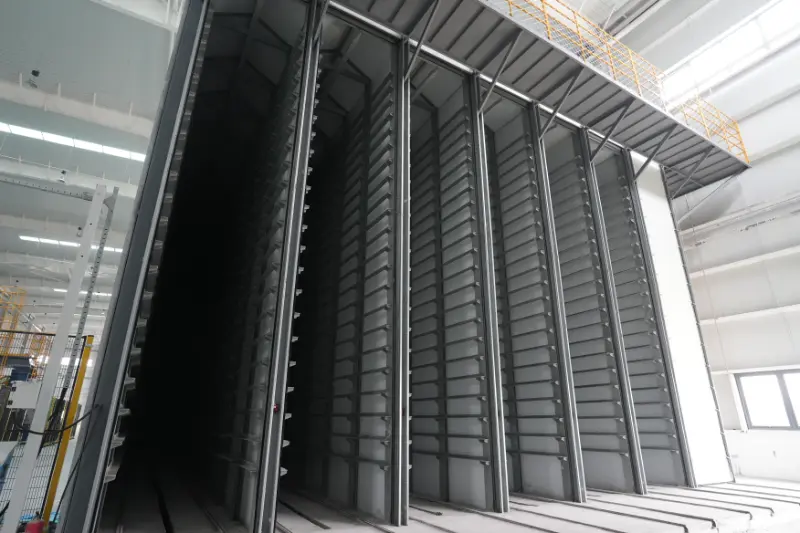
Proper curing allows the cement to continue hydrating, enabling the concrete to gradually reach its design strength.
Common curing methods include:
Natural curing
Steam curing
Static curing (resting)
Other industrial curing methods
Therefore, the molding equipment, mold, mix design, and curing process must be considered as an integrated system.
VII. Why do hollow bricks produced by different machines vary in strength?
Simply put, the factors influencing the compressive strength of hollow bricks can be summarized as follows:
Raw materials → Proportioning → Mixing → Material feeding → Vibration → Press molding → Demolding → Curing
Inconsistent control at any stage can affect the final product’s performance.
Therefore, when selecting a hollow brick production line, one should not focus solely on the equipment’s theoretical capacity but also consider:
Vibration system;
Molding pressure;
Material feeding system;
Mold precision;
Automation control;
Production stability;
Curing system.
VIII. The QT10-15: Enabling stable production of high-quality hollow bricks
For enterprises engaged in the large-scale production of hollow bricks, a stable molding process is the essential foundation for ensuring product quality.
.jpg "blog")
This fully automatic block molding machine is suitable for producing a wide range of concrete products. Through the coordinated control of production stages—such as automatic proportioning, material feeding, vibration molding, and demolding—it provides customers with a stable solution for concrete block production.
Depending on market specifications and production requirements, the machine can be fitted with appropriate molds to produce various concrete products, including hollow blocks, solid blocks, paving stones, and curbstones.
The compressive strength of hollow bricks is not determined by a single factor.
High-quality raw materials form the foundation, and a proper mix ratio is the prerequisite; stable vibration and molding pressure are critical, while mold precision and scientific curing methods further influence the final product performance.
For concrete product manufacturers, selecting stable, high-efficiency hollow brick equipment—combined with optimal mix designs and curing processes—is the only way to consistently produce high-strength concrete hollow bricks of reliable quality.